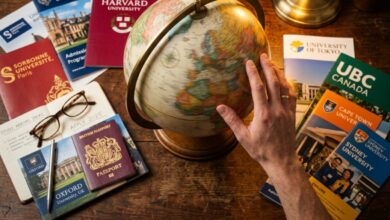
Ireland Scholarships for International Students: Requirements and Common Mistakes
Introduction
Ireland can be an appealing study destination for international students because of its English-language education, European location, research universities, and growing global profile. Scholarships can reduce the cost of study, but they are competitive and usually require careful planning before the deadline.
This guide focuses on Ireland scholarships for international students, including requirements and common mistakes. It explains how to review eligibility, prepare documents, understand the Government of Ireland International Education Scholarship, and avoid weak applications.
Understand the Main Scholarship Types
Funding for international students in Ireland can come from government programmes, higher education institutions, research bodies, universities, and field-specific awards. Some scholarships are broad; others are limited by level, nationality, institution, course, or academic profile.
The Government of Ireland International Education Scholarship, managed by the Higher Education Authority, is a high-profile example. The 2026 call information states that it supports high-calibre international students for one year of full-time study at master’s, postgraduate diploma, or PhD level, with 60 scholarships awarded each year.
Admission Comes First
For many scholarship opportunities, students need to apply to an Irish higher education institution and may need a conditional or final offer before applying for the scholarship. The course must also be eligible under the scholarship rules. This makes admission timing essential.
Students should contact the institution if they are unsure whether their programme qualifies. Waiting until the scholarship deadline to ask eligibility questions can be too late, especially when admissions teams are busy.
Eligibility Requirements to Check
Eligibility can include country or region, domicile, degree level, academic record, admission status, previous scholarship history, field of study, and institutional participation. For GOI-IES, the 2026 call described eligibility for applicants domiciled outside the EU, EEA, Switzerland, and the United Kingdom, with proof of admission required.
Students should not assume that being international is enough. Each scholarship has its own target group. A strong first step is to make a yes/no eligibility checklist before writing essays or requesting references.
Documents Usually Needed
Documents may include passport, academic transcripts, degree certificates, admission offer, CV, references, personal statement, research proposal for research degrees, English language evidence, and scholarship-specific forms. Some scholarships require references to be uploaded through a portal.
Document quality matters. Names, dates, degree titles, programme names, and institution details should match. If documents are not in the required language, certified translations may be needed. Students should check official instructions instead of guessing.
What Selection Panels Often Look For
The GOI-IES assessment information highlights academic achievement, communication skills, extracurricular participation, and a strong rationale for studying in Ireland connected to longer-term goals. Other scholarship providers may use different criteria, but the pattern is useful: selection committees want evidence, not only ambition.
A strong application explains why the course, institution, Ireland, and applicant goals fit together. A weak application could be sent to any country without changing a word. Specificity helps the student sound serious.
Common Mistakes
One mistake is applying before confirming course eligibility. Another is waiting too long for references. Students also hurt their chances by using generic statements, ignoring the scholarship’s goals, missing portal instructions, or submitting near the deadline when technical issues are more likely.
Another common mistake is treating the scholarship as a full-life budget without checking what is covered. A stipend or fee waiver may still leave costs such as flights, deposits, insurance, visa fees, family expenses, and first-month living needs.
How to Prepare a Strong Application
- Confirm the course and institution are eligible before starting the scholarship form.
- Secure conditional or final admission when the scholarship requires it.
- Prepare references early and give referees clear deadlines.
- Write a specific rationale for Ireland, the institution, and the course.
- Show academic evidence, communication ability, leadership, or extracurricular impact.
- Submit before the final day to avoid portal or document issues.
Budget and Award Conditions
Scholarship value should be compared with real costs. The GOI-IES programme describes a stipend and a full fee waiver from host institutions for the scholarship year, but students still need to understand travel, accommodation, visa, insurance, and continuation costs if the programme lasts longer than the award.
Students should also check whether the award is renewable, whether it covers only one academic year, whether full-time study is required, and whether changing course affects funding. Award conditions can shape the entire study plan.
References and Timing
References can be decisive because they help confirm academic strength, communication ability, leadership, and readiness for postgraduate study. Students should ask referees early, share the scholarship criteria, provide a current CV, and explain the deadline clearly. A rushed reference may be too generic to help.
If the portal requires references to be uploaded by the applicant, the student should confirm format and deadline before requesting them. If referees submit directly, the student should monitor completion without waiting until the final day.
Writing a Strong Ireland Rationale
A strong Ireland rationale should connect the course, institution, country, and future plan. It should explain why this programme matters, why Ireland is relevant, and how the applicant expects to use the education after graduation. Generic praise for Ireland is not enough.
Students should include examples from academic work, professional experience, community involvement, or research interests. The application should feel like a planned next step, not an escape plan.
How to Use University Offices
Irish higher education institutions can be important sources of clarification. International offices, admissions teams, and scholarship pages may explain whether a course is eligible, whether an offer is required, and what documents are accepted. Students should ask precise questions and save the answers.
A useful question is not do I qualify for scholarships? A stronger question is: I am applying to this programme, I meet these conditions, and I want to confirm whether it is eligible for this scholarship. Specific questions usually receive more useful replies.
Planning If the Award Is for One Year
Some awards support only one academic year. If the student’s programme lasts longer, they should calculate the second-year funding plan before accepting. Tuition, rent, visa renewal, insurance, books, and living costs may continue after the award period ends.
A student can still accept a one-year award, but only with a realistic continuation plan. Otherwise, a scholarship win can turn into financial pressure later.
| Area | Question to Ask | Why It Matters |
|---|---|---|
| Eligibility | Am I in the target group for this exact scholarship? | Prevents wasted applications |
| Admission | Do I need an offer before applying? | Timing can decide whether the application is valid |
| Evidence | Can I prove academic and extracurricular claims? | Selection is based on credible records |
| Funding | What costs remain after the award? | Avoids financial surprises after arrival |
Conclusion
Ireland scholarships can be valuable, but strong applications are built early. Students should verify course eligibility, secure admission steps, prepare references, write a specific rationale, and compare scholarship benefits with the real cost of studying in Ireland.
For more information, review the official guidance below before taking the next step.
You will be redirected to another website
FAQ
Are Ireland scholarships only for master’s students?
Not all scholarships are the same. The Government of Ireland International Education Scholarship focuses on NFQ levels 9 or 10, while universities may offer other awards for different levels.
Do I need an admission offer first?
For some scholarships, yes. GOI-IES applicants need proof of admission to an eligible Irish institution. Other awards may have different timing.
How competitive are Ireland scholarships?
Many are competitive, especially national or high-value awards. A strong application needs academic evidence, clear goals, and careful compliance with instructions.
Can one scholarship cover everything?
Sometimes support can be significant, but students should calculate remaining costs such as travel, housing, visa fees, insurance, and living expenses.
Editorial Note
This article is general educational information and does not provide immigration, legal, financial, admission, or scholarship consulting advice. Ireland scholarship rules, deadlines, benefits, eligibility, and participating institutions can change.
Published on: 31 de August de 2026

Daniel Carter
Daniel Carter is the lead editor at Abroad FinancasPro, where he researches and edits practical guides about visa sponsorship, scholarships, travel preparation, immigration documents, and living abroad. His work focuses on helping readers understand requirements, compare options, prepare documents, avoid common mistakes, and verify important details with official sources before taking the next step.