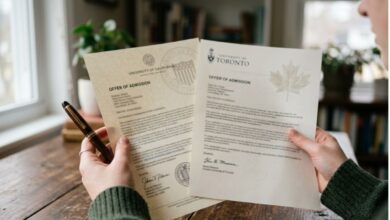
Documents Checklist for International Scholarship Applications
Introduction
Scholarship applications often fail for simple administrative reasons: a missing transcript, an expired passport, an unofficial translation, a late reference, or a file uploaded in the wrong format. A good document checklist reduces these risks and gives the student more time to focus on quality.
There is no universal document list for every scholarship. Requirements vary by country, university, field, award level, and funding provider. The safest approach is to build a checklist from the official scholarship page and update it every time the provider changes instructions.
Identity Documents
Most international scholarships require proof of identity, usually a passport or national identity document. Students should check expiry dates early because passport renewal can affect application forms, visa planning, travel, and admission records.
Names must be consistent across documents. If a transcript, passport, diploma, or language test uses a different spelling, the student may need official clarification or supporting documents. Small inconsistencies can delay review.
Academic Records
Academic records may include transcripts, diplomas, degree certificates, grading scales, class rank, enrollment letters, or predicted grades. Some institutions require official documents sent directly by the school, while others accept uploaded copies during the first stage.
Students should check whether the transcript must show completed credits, course names, grades, grading scale, and institutional stamp. If the scholarship is for postgraduate study, the provider may also ask for a research proposal, thesis summary, or evidence of previous academic work.
Translations and Certification
If documents are not in the required language, certified translations may be necessary. Students should not assume that a personal translation or machine translation is acceptable. Official instructions may require a sworn translator, notary, university-issued English version, or other specific format.
Translation timing matters. The student may need the final transcript before ordering a translation, and some translators need several days or weeks. This should be planned before the application deadline becomes urgent.
Language Evidence
Language requirements can include English tests, other language certificates, previous study in a specific language, or institutional exemptions. Students should check accepted tests, minimum scores, validity periods, and whether results must be sent directly by the testing provider.
If a student expects an exemption, the exemption should be confirmed through official instructions. Assuming that previous study automatically removes the test requirement can be risky, especially when scholarship and admission rules differ.
References
Recommendation letters may be academic, professional, or both. Some scholarships ask referees to upload letters directly, while others allow the applicant to submit them. Students should identify referees early and provide context: scholarship name, programme, deadline, CV, and points the letter can support.
A generic reference is less useful than one that confirms specific qualities such as academic preparation, research ability, leadership, reliability, or professional maturity. Referees need time to write that kind of letter.
Financial and Need Documents
Need-based scholarships may request income documents, tax records, bank statements, household information, employer letters, or financial aid forms. Students should handle these documents carefully because they contain sensitive information.
Only submit financial documents through official portals or verified channels. If an unofficial website asks for bank details, fees, or private documents before clearly identifying the scholarship provider, the opportunity should be checked carefully.
Programme-Specific Materials
Some awards require a personal statement, motivation letter, study plan, research proposal, portfolio, writing sample, interview recording, or project plan. These are not just documents; they are part of the student’s argument for funding.
Students should give each written material a separate deadline. A research proposal or portfolio may need more revision than a simple form, and rushing it can weaken an otherwise complete application.
Submission Checklist
- Confirm the official scholarship page and deadline.
- Check identity document validity and name consistency.
- Collect transcripts, diplomas, grading scales, and academic evidence.
- Order translations or certified copies if required.
- Request references early and confirm the submission method.
- Prepare essays, study plans, research proposals, or portfolios.
- Save confirmation emails and application IDs after submission.
File Organization
A simple folder system can prevent mistakes. Create one folder for each scholarship, then separate final files from drafts. Use clear file names that include the document type, student name, and date when useful. Avoid uploading a file named final-version-newest-real-final because it increases confusion.
Before submitting, open every file and check that it is readable, complete, correctly oriented, and under the size limit. Scanned documents should be clear enough for reviewers to read names, dates, stamps, and grades.
Country and Institution Differences
Document rules can change depending on where the student applies. One university may accept a scanned transcript during application and ask for official copies after admission. Another may require documents to be sent directly by the issuing school. Some scholarships accept conditional admission, while others require an unconditional offer before funding review.
Because of these differences, students should avoid building one universal document packet and assuming it works everywhere. The better method is to keep a master folder, then create a scholarship-specific checklist for each application. This protects against sending too much, too little, or the wrong format.
Sensitive Documents and Safety
Scholarship applications may involve passports, financial records, tax documents, and personal identification. Students should submit these only through official portals or verified email addresses listed by the institution or scholarship provider. Unofficial messages requesting private files should be treated cautiously.
If a provider asks for unusual payment, bank credentials, login details, or private financial data before the award is verified, the student should pause and confirm through official channels. Document preparation is not only an administrative task; it is also part of protecting personal information.
What to Do When a Document Is Not Ready
If a required document is delayed, the student should check whether the provider accepts provisional documents, conditional transcripts, predicted grades, or an official explanation from the school. Some scholarships allow this, while others do not. Guessing can lead to an incomplete application.
When contacting an institution, the message should be specific. Include the scholarship name, programme, deadline, document that is delayed, and expected availability date. A clear question is more likely to receive a useful answer than a broad request for help.
Final Submission Review
The final review should happen before the last day. Students should check that all files open correctly, each document belongs to the right scholarship, translations match the original, references were received, and the portal shows submitted rather than saved. Screenshots or confirmation emails should be stored with the application records.
After submission, keep the same folder until the selection cycle is complete. If the provider asks for clarification, interview documents, or updated records, having a clean archive makes the response faster and reduces the risk of sending inconsistent information.
This simple habit also helps students compare future applications and avoid repeating document mistakes across different scholarship cycles.
For more information, review the official guidance below before taking the next step.
You will be redirected to another website
FAQ
Are all scholarship document lists the same?
No. Document requirements vary by award, institution, country, field, and study level. Students should build the checklist from the official page for each scholarship.
Do I need certified translations?
Only if the scholarship or institution requires them. If documents are not in the accepted language, check whether certified, sworn, notarized, or university-issued translations are required.
When should I request recommendation letters?
As early as possible, ideally several weeks before the deadline. Referees write stronger letters when they understand the scholarship and have time to prepare.
Should I submit financial documents by email?
Only if the official provider instructions say so. Sensitive documents should be sent through verified channels, and students should be cautious with unofficial requests.
Editorial Note
This article is general educational information and does not provide legal, immigration, financial, admission, or scholarship consulting advice. Scholarship rules, documents, deadlines, funding values, and eligibility criteria can change. Readers should verify details through official sources and the relevant institution before making decisions.
Published on: 31 de August de 2026

Daniel Carter
Daniel Carter is the lead editor at Abroad FinancasPro, where he researches and edits practical guides about visa sponsorship, scholarships, travel preparation, immigration documents, and living abroad. His work focuses on helping readers understand requirements, compare options, prepare documents, avoid common mistakes, and verify important details with official sources before taking the next step.