How to Find Scholarships Abroad Without Paying Application Agents
Introduction
Finding scholarships abroad does not require paying an agent who promises special access. Many legitimate scholarships are published by universities, governments, embassies, foundations, research bodies, and international organizations. The challenge is learning where to search and how to verify opportunities.
This guide explains how students can search independently, avoid scams, compare scholarship quality, and build a reliable list without relying on high-pressure services or unofficial promises.
Start With University Funding Pages
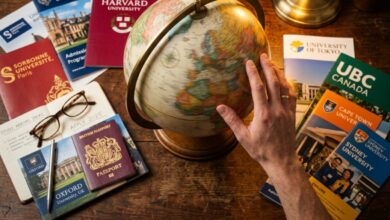
University websites are often the best place to start because they connect scholarships to real programmes. Students should check the admission page, international student page, department page, graduate school page, and financial aid or scholarships office.
Some awards are automatic with admission, while others require separate forms. Department-level funding may not appear in broad scholarship databases, so checking the specific faculty or programme can reveal better-fit options.
Use Government and Embassy Sources
Government education portals and embassy pages can list national scholarships, exchange programmes, bilateral agreements, and country-specific opportunities. These sources are useful because they usually publish official eligibility rules and application instructions.
Students should still confirm details on the final provider page. A government listing may point to a university or scholarship organization where the current deadline and documents are explained more fully.
Check Recognized International Organizations
International organizations may offer fellowships, research support, development-focused awards, or professional training opportunities. These awards often have specific missions and may require strong alignment with fields such as education, science, public policy, sustainability, culture, or development.
The student should read the mission of the organization before applying. A strong application explains fit with the award’s purpose, not only the student’s need for funding.
Search by Field and Level
A general search for scholarships abroad can produce overwhelming results. It is more effective to search by field, degree level, country, and applicant profile. For example, master’s scholarships in public health may produce different results than undergraduate engineering scholarships.
Students should also search for assistantships, fellowships, bursaries, tuition awards, research grants, and department funding. Not every opportunity uses the word scholarship.
Avoid Agents That Promise Approval
Students should be cautious with anyone promising guaranteed scholarship approval, special access, or fast results in exchange for payment. Legitimate scholarships are competitive and usually require direct review by the provider or institution.
An agent may help with organization or translation if transparent, but no outside person can honestly guarantee an award they do not control. Students should never share bank credentials, passwords, or sensitive documents through unverified channels.
Build a Verification Checklist
- Is the scholarship listed on an official university, government, or recognized organization page?
- Does the page clearly identify the provider?
- Are eligibility rules and deadlines published?
- Is the award value explained?
- Are contact channels official?
- Does anyone request payment for guaranteed approval?
- Does the application ask for unnecessary sensitive data?
Compare Quality, Not Just Quantity
A long list of scholarships is not automatically useful. Students should prioritize awards where they meet eligibility, understand the documents, have enough time, and can write a strong application. Poor-fit scholarships consume energy without improving chances much.
Quality also means financial realism. A small scholarship in an expensive city may not solve the budget problem. A less famous award with strong fit and realistic cost may be more valuable.
Create a Scholarship Search Routine
Students can set aside one weekly session for searching and one for applications. During the search session, add only verified opportunities to the tracker. During the application session, work on documents, essays, references, and questions for official offices.
This routine prevents endless searching from replacing real applications. At some point, the student must stop collecting links and start preparing strong submissions.
What to Do Before Paying Anyone
If a student is considering paid help for editing, translation, or document organization, they should separate that service from scholarship approval. Paying for proofreading is different from paying for a guaranteed award. The contract should be clear about what service is provided.
The student should also check whether the same task can be done through free university resources, teachers, mentors, scholarship offices, or official guidance. Many core application steps can be completed without paid agents.
Free Resources Students Often Miss
Many students overlook free support that already exists. University admissions offices, international student offices, scholarship pages, writing centers, professors, school counselors, embassy education sections, and official webinars can provide direction without charging for guaranteed outcomes.
These resources may not complete the application for the student, but they can clarify requirements, explain deadlines, identify official forms, and point to legitimate funding sources. This is usually safer than relying on a stranger who claims private access to awards.
How to Evaluate a Scholarship Listing
A legitimate listing should make the provider, award value, eligibility rules, deadline, application route, and contact information reasonably clear. If a listing only says easy approval, urgent opportunity, or pay now to secure funding, it should be verified before any action.
Students should copy the official source link into their tracker. If they cannot find an official source, they should mark the opportunity as unverified. This single habit can prevent wasted effort and reduce exposure to scams.
Build Independence Gradually
The first independent scholarship search may feel slow. That is normal. After a few applications, students usually become faster at recognizing real providers, filtering eligibility, preparing documents, and adapting essays. Independence is a skill that improves with a system.
How to Protect Time and Energy
Searching without a system can consume weeks. Students should limit research sessions, save only verified opportunities, and set clear application priorities. The goal is not to find every scholarship in the world; it is to find the ones that fit well enough to justify a serious application.
A good rule is to stop researching once the student has a balanced shortlist for the current cycle. Then the focus should move to writing, references, documents, and submission. Many students lose time because they keep searching instead of applying.
Students should also avoid comparing themselves constantly with success stories online. Public stories often skip the months of preparation, rejections, revisions, and support behind a scholarship result.
A steady process is more useful than urgency. Verified sources, clear notes, and direct applications give students more control over the outcome and reduce dependence on risky shortcuts.
Search Strategy Table
| Source | Best For | What to Verify |
|---|---|---|
| University pages | Course-linked awards | Separate forms and deadlines |
| Government portals | National programmes | Country and eligibility rules |
| Embassy pages | Bilateral opportunities | Current cycle information |
| Organizations | Mission-based fellowships | Provider legitimacy |
| Departments | Field-specific funding | Supervisor or programme requirements |
Conclusion
Students can find scholarships abroad without paying agents by using official sources, checking eligibility carefully, and building a disciplined search system. The safest strategy is simple: verify the provider, avoid guarantees, protect personal documents, and apply directly whenever possible.
For more information, review the official guidance below before taking the next step.
You will be redirected to another website
FAQ
Do I need an agent to get a scholarship abroad?
Usually no. Many scholarships can be found and applied for directly through official university, government, and organization websites.
Are all paid services scams?
No. Some editing or translation services may be legitimate, but payment should be for a clear service, not a promised scholarship result.
What is the biggest warning sign?
Guaranteed approval in exchange for money is a major warning sign. Legitimate scholarships are competitive and cannot be guaranteed by unofficial agents.
Where should I search first?
Start with university funding pages, government education portals, embassy pages, and recognized international organizations connected to your field.
Editorial Note
This article is general educational information and does not provide legal, immigration, financial, admission, or scholarship consulting advice. Scholarship rules, documents, deadlines, award values, visa requirements, and eligibility criteria can change. Readers should verify details through official sources and the relevant institution before making decisions.
Published on: 31 de August de 2026

Daniel Carter
Daniel Carter is the lead editor at Abroad FinancasPro, where he researches and edits practical guides about visa sponsorship, scholarships, travel preparation, immigration documents, and living abroad. His work focuses on helping readers understand requirements, compare options, prepare documents, avoid common mistakes, and verify important details with official sources before taking the next step.